When I look back, I can still see that small Catholic boy kneeling in a pew, afraid of his own heart. I was told that holiness was about obedience, that love had rules, and that the body was something to discipline, not celebrate. Yet even as a child, I felt something gentler and more vibrant moving beneath those lessons—like a shimmer at the edge of sight, a presence that whispered, you are already sacred.
For years, I tried to ignore that whisper. I memorized prayers, sang hymns, and confessed sins I hadn’t truly committed, all in an effort to be “good.” But the God I was told to fear never felt real to me. What felt real was the quiet magic of sunlight through stained glass, the smell of incense, the sound of rain on the church roof. Holiness was never in the rules; it was in the beauty between them.
Eventually, I couldn’t keep living by fear. As I began to understand that I was transgender, the truths I’d been taught began to crack open. My transition wasn’t just physical—it was spiritual. I was shedding old dogma and stepping into authenticity. Leaving the Church was painful, but also liberating, like walking out of a burning cathedral into the cool night air. I didn’t stop believing in wonder; I just stopped believing that I needed permission to experience it.
For a time, I became a Humanist. It was a welcome breath of honesty after years of guilt. Humanism taught me that meaning comes from within us, not from divine decree. I found peace in reason, in ethics grounded in compassion, and in the simple dignity of being human. But something was missing. I missed ritual—the candlelight, the symbols, the rhythm of sacred time. I missed the sense of connection that came from honoring life as mystery as well as truth.
When I discovered the Unitarian Universalist Church, it felt like coming home to a community that made room for every part of me. I didn’t have to pretend or hide. There were Pagans, Christians, Buddhists, and atheists—all sitting together, sharing a belief that love and justice were sacred acts. For the first time, I belonged without needing to fit into anyone else’s definition of faith. The UUs gave me language for what I already felt: that spirituality is not about conformity, but connection.
Still, something within me kept calling—something wild, soft, and glowing. That’s when I found Faerie Wicca. It wasn’t about worshiping distant gods or obeying cosmic laws. It was about listening to the energy that dances through all living things—the playful, sensual, transformative pulse I now call faerie energy. It wasn’t new to me; it was what I’d been feeling all along.
Faerie energy taught me that magic isn’t separate from life—it is life. It’s in the way the air hums before a storm, the warmth of a lover’s breath, the courage of becoming yourself. It’s the space between reason and reverence, where beauty and truth intertwine. Through Faerie Wicca, I learned to turn ritual into art and self-acceptance into spellwork. Every candle I light, every breath I take in awareness, every touch I give in love becomes a way of honoring that energy.
Now, when I light my altar candles, I still remember that Catholic boy—but I hold him with compassion. He was always searching for connection, for something beautiful that could make sense of the longing inside him. He didn’t know that what he sought wasn’t outside of him, but within—the spark of faerie energy that had been waiting, patient and radiant, all along.
My path—from Catholicism to Humanism, to Unitarian Universalism, and finally to the Pink Faerie Way—has been a journey of integration. Each step has left its own gift: the reverence of ritual, the clarity of reason, the community of compassion, and the magic of becoming.
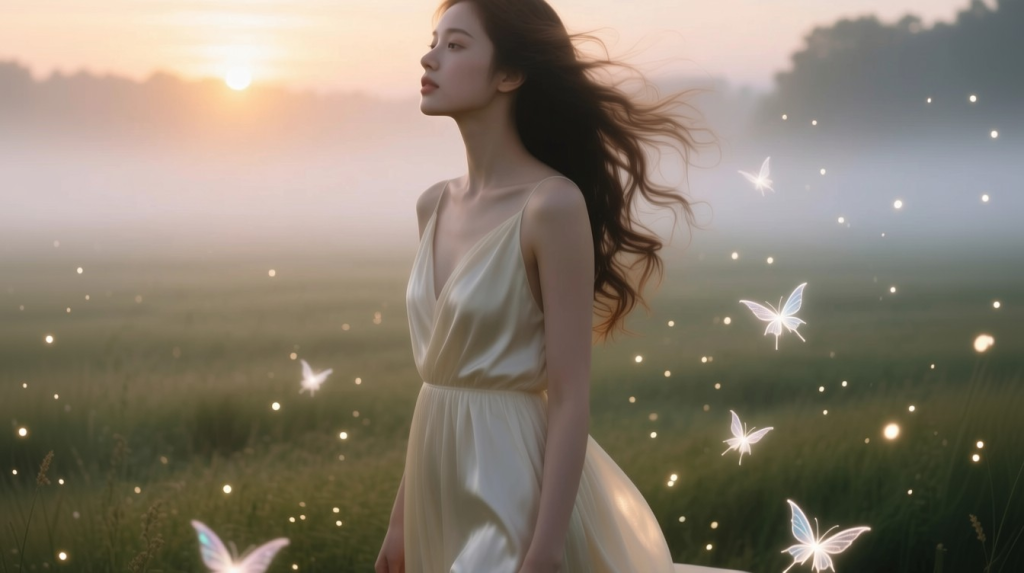
I am no longer the boy who feared his reflection. I am the woman who found the faerie within it. And she dances in the light.